Hair Color Formulation: Why Most Colorists Get It Wrong
It’s Not About Level — It’s About Pigment Load
By Master Hair Colorist Martin Rodriguez
Most hair colorists are taught to formulate based on level—level 1 through 10.
But after over 40 years behind the chair, I can tell you this:
👉 Level alone does not determine your result.
The biggest mistake in hair color formulation is ignoring pigment load—the true weight of color inside every tube.
What Most Colorists Don’t Understand
When you look at a tube of color labeled “level 5” or “level 8,” you’re only seeing a visual indicator, not the full chemical reality.
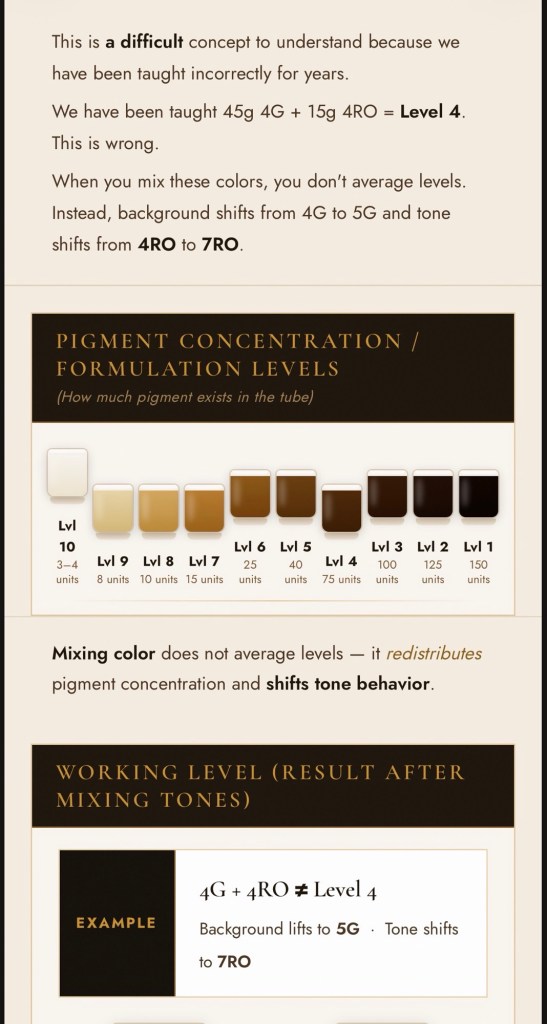
Each level carries a different amount of pigment density:
Level 1 → extremely heavy pigment load Level 5 → medium-heavy pigment Level 8 → light pigment Level 10 → minimal pigment
So when you mix colors…
👉 You are not just mixing levels
👉 You are mixing pigment weight
The Real Formula Behind Formulation
Let’s break it down the way professionals should think:
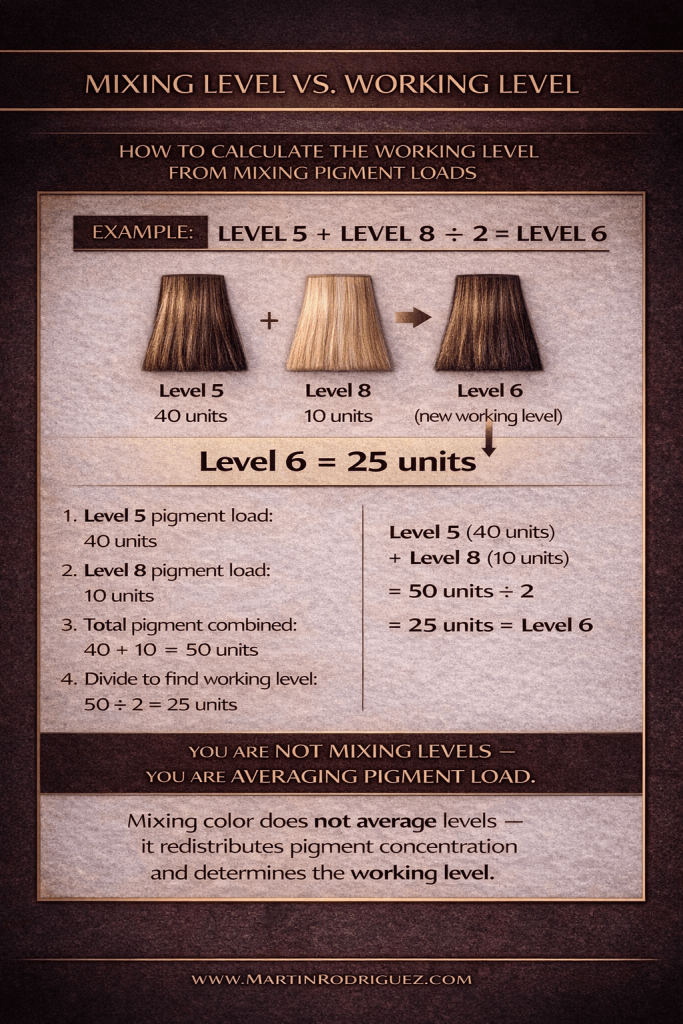
Level 5 ≈ 40 units of pigment Level 8 ≈ 10 units of pigment
Now mix them:
👉 (40 + 10) ÷ 2 = 25 units of pigment
That equals approximately a level 6 working result
Why This Changes Everything
Most colorists would assume:
👉 “Level 5 + Level 8 = Level 6 or 7”
But that’s guessing.
When you understand pigment load:
You predict outcomes instead of hoping You avoid muddy, overfilled color You eliminate hollow, under-toned blondes
Mixing Level vs. Working Level
This is where even experienced colorists get it wrong.
Mixing Level = what’s written on the tube
Working Level = how the color actually behaves on the hair
Example:
4G + 4RO
Most would say:
👉 “That’s still a level 4.”
But in reality:
The gold base begins to reflect lighter (closer to level 5 behavior) The red-orange expresses stronger (closer to level 6–7 visually)
Why?
👉 Because different tones carry different pigment strengths
The Coffee Analogy (Simple but Accurate)
Think of formulation like this:
Black coffee = heavy pigment Milk = low pigment
When you mix them:
👉 You don’t get “half a level 4”
👉 You get a new concentration of color
Hair color works exactly the same way.
Why Most Formulas Fail
When colorists formulate only by level, they run into:
Hair turning too dark or flat Brassiness that won’t neutralize Uneven color in corrections Toners that don’t hold
Because they’re not controlling:
👉 Pigment density + undertone balance
The Professional Shift
If you want consistent, high-level results, stop asking:
👉 “What level am I using?”
Start asking:
👉 “How much pigment am I putting into the hair?”
This is where true color control begins.
Real-World Application Behind the Chair
In advanced color work—especially:
Color correction Blonding services Balayage and color contouring
Understanding pigment load allows you to:
Lighten without overloading the hair Tone without killing brightness Blend levels seamlessly Create clean, controlled finishes
Why My Work Looks Different
Hair color isn’t just application—it’s chemistry and placement working together.
Every formula I use is based on:
Pigment weight Background control Tone behavior Hair condition
👉 That’s how you achieve clean blondes, rich brunettes, and seamless corrections.
Book Your Consultation
If your hair color has gone too dark, too warm, or just doesn’t look right…
It’s not always the color—it’s the formulation behind it.
At Ooh La La Salon Spa in Fountain Valley, I specialize in:
Advanced hair color correction Custom blonding and balayage Precision formulation based on pigment control
All services are customized. Final pricing is confirmed during your consultation.
👉 Book your appointment today at MartinRodriguez.com
 Hair COLORIST Martin Rodriguez
Leave a comment