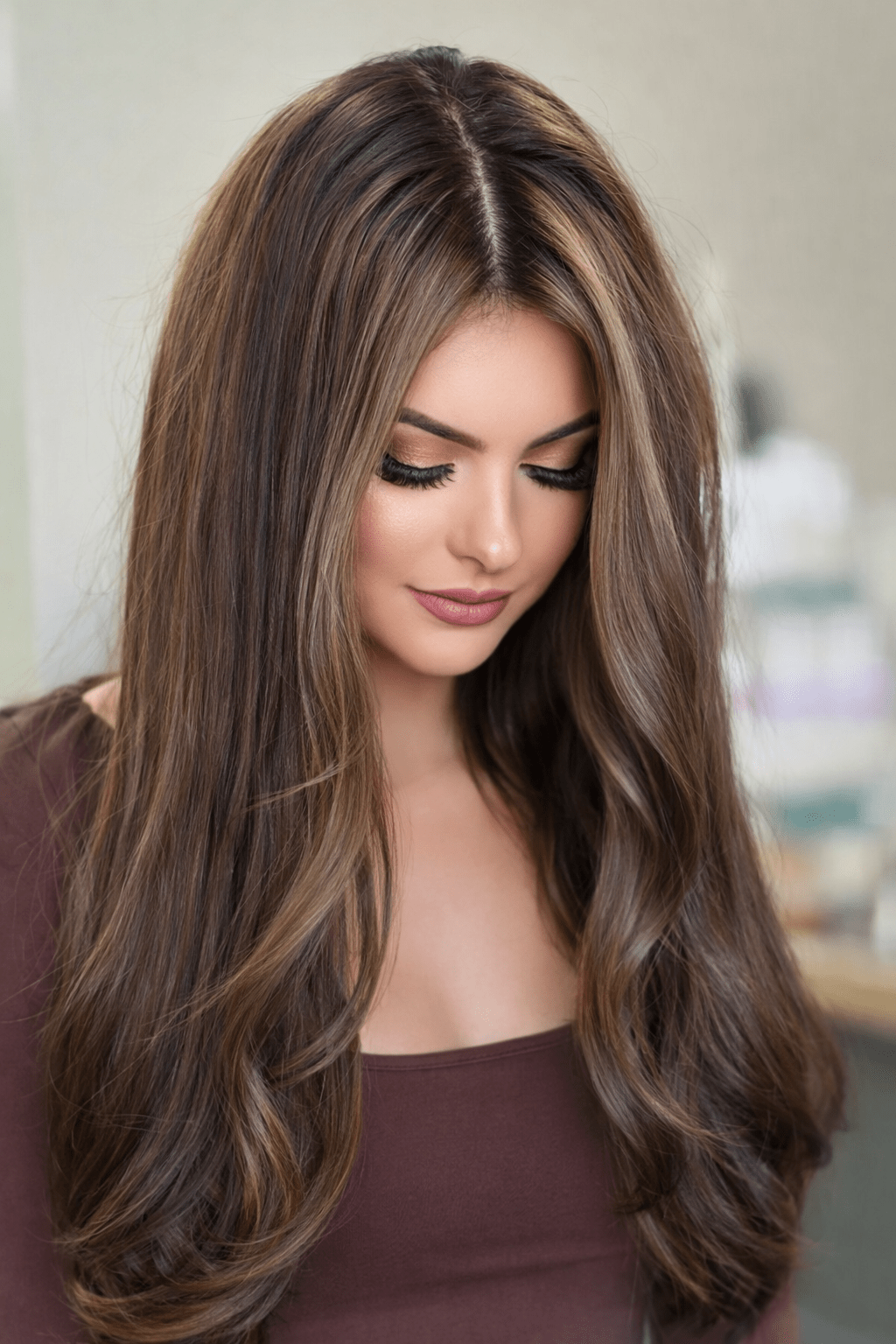
Reverse balayage is the opposite of traditional balayage, where darker tones are added back into the hair instead of lightening it. It’s perfect for creating depth, dimension, and a low-maintenance, natural-looking grow-out. Here’s how to approach it:
What is Reverse Balayage?
• Instead of lightening, darker shades are painted onto the hair to tone down overly blonde or bright areas.
• The goal is to create a seamless blend of darker roots with lighter ends, adding dimension and richness.
• It’s ideal for clients who want a more natural look, are transitioning back to their natural hair color, or prefer lower-maintenance color.
Step-by-Step Reverse Balayage Process
1. Consultation and Prep
1. Assess the Hair:
• Evaluate the existing lightness, natural base, and overall tone (warm or cool).
• Determine the depth and placement of the darker tones.
2. Choose Colors:
• Select shades 1–3 levels darker than the current base.
• Use a mix of lowlights and toners for a multi-dimensional effect.
• Stick to warm tones (e.g., caramel, mocha) for warmth or cool tones (e.g., ashy brown, mushroom) for a cooler look.
2. Sectioning
1. Divide the hair into 4 quadrants for easier control.
2. Work in diagonal back sections to mimic natural light and shadow.
3. Application
1. Blend at the Roots:
• Start at the root area with the darker shade to create depth.
• Feather the darker color down into the mid-lengths, avoiding the ends.
2. Strategic Lowlighting:
• Paint darker tones onto random strands in the mid-lengths to create a dimensional, natural look.
• Use a freehand technique for soft blending.
3. Feathering and Transition:
• Use tools like the ColourWand for precision blending.
• Keep the strokes light and soft to avoid harsh lines.
4. Processing and Toning
1. Process:
• Allow the darker shades to process as per manufacturer instructions.
• Check frequently to ensure the desired depth is achieved.
2. Tone the Lighter Ends:
• Apply a gloss or toner to the lighter ends for a harmonious blend.
• Choose a shade that complements the darker base.
Finishing Touches
1. Gloss and Shine:
• Finish with a gloss or conditioning treatment to seal the color and add shine.
2. Style:
• Style the hair with soft waves or curls to showcase the contrast and dimension.
• Texturize with finishing spray for a natural, lived-in look.
Pro Tips for Reverse Balayage
• Soft Transitions: Use a feathering motion to blend the darker color into the lighter areas without creating harsh lines.
• Dimension: Avoid making the entire head one color. Leave some lightness around the face or through the ends for a balanced look.
• Custom Placement: Focus on darker tones in areas where you want to create depth, like the crown or nape, and keep the lighter tones visible around the face.
• Maintenance: This technique allows for a softer grow-out, making it a great option for clients who want low upkeep.
Would you like to have your hair look better adding contrast and detailed dimension schedule your hair color appointment
Text 714 366-6964
All appointments require a deposit no exceptions.
 Hair COLORIST Martin Rodriguez
Leave a comment